How monetizing your mailing list can transform your email marketing
Summarize
Email marketing is still one of the most powerful marketing tools available.
However, if you’re simply using your mailing list to promote newsletters and send occasional updates, you’re missing out on the revenue opportunities this marketing channel can provide. There are new ways to not only get your engagement rate up but also make your email strategy a diversified monetization engine.
From in-email ads and cross-selling existing customers to automated post-purchase flows, this article will discuss some of the most effective monetization strategies you can implement within your email marketing strategy to get the most out of the subscriber list you’ve spent so long building.
4 ways to monetize your mailing list
Your mailing list is made up of people who have signed up to receive your content and shoppers who have already made a purchase from you. Because you already have an audience who has engaged with your brand in the past, this makes the possibilities endless, and there are various ways you can monetize your mailing list.
Newsletter subscriptions
Once you have built up a sizable mailing list that values your content, there is an opportunity to introduce a paid subscription. This is a premium service, giving subscribers access to exclusive content that is not available to everybody else.
As well as giving you the opportunity to monetize your content, creating an extra layer of content that is essentially hidden means readers are going to become curious and want to access it for themselves to see what they are missing.
One popular strategy is to provide the entire mailing list with a version of the newsletter that gives snippets of the premium content but requires them to subscribe to access the entire newsletter. This encourages more sign-ups and will help you build up your subscriber total.
Take the Los Angeles Times, for example. The LA Times has an opportunity for monetization by using its free email list as a funnel to a paid content subscription model.
(Source: Email from LA)
This means readers hit a paywall after consuming a set number of free articles and are encouraged to subscribe to a premium plan for more content.
Affiliate links
Affiliate marketing is a common way to monetize email marketing efforts, as it can be done subtly. Links can be naturally incorporated into email copy, and if a subscriber clicks on the content and carries out the desired action, a commission will be earned.
To maximize earning potential, finding affiliate products or services that are closely related to the theme of the email will help increase the likelihood of conversions. The link should offer value to the reader and naturally slot into the body of the email; otherwise, this can look overly sales focused and hinder the effectiveness of the campaign.
Only promoting products that naturally align with their audience, their aim was to address customer pain points while still increasing their own affiliate revenue by $12,500 per month.
Here’s a great example of how affiliate links can be used within your email marketing:
Just remember that any affiliate links must be disclosed in line with the Federal Trade Comission’s guidelines. This transparency is necessary to avoid being flagged for using deceptive marketing strategies.
Ad space
If you’re looking for a straightforward way to monetize your emails in a way that doesn’t require finding relevant affiliate links to use, selling ad spaces is a good solution.
By including a slot for ads in your email templates, other businesses can choose to purchase this space for their own advertisements. Whether this is a banner space that they can use to link to a landing page or a section of text to promote their services, this expands your monetization opportunities to a wider audience.
Different businesses choose to charge for ad space differently. Some charge a flat rate, some require ongoing packages, and some charge on a per-click basis. If you have a large audience that shows good engagement, there is an opportunity to create a good return on this strategy.
You’ll most commonly see ad space filled up in newsletters from influencers and opinion leaders, such as author Gretchen Rubin, who has an ad segment below her Five Things That Make Me Happy section that features some feel-good products.
(Source: Email from Gretchen Rubin)
While these are labelled “sponsored,” she has chosen products and themes that naturally align with the newsletter’s tone and her personal branding.
Flash sales
When you offer deals solely to your email list, it can make your subscribers feel like they have access to an exclusive offer. If they feel like they are being rewarded for being a loyal customer, this not only makes them feel a closer connection to your business but also makes them feel like it’s an offer that is too good to turn down.
One powerful strategy is to create flash sales that run for only a limited time, creating a sense of urgency that makes readers act quickly. Using flashing countdown graphics and bright colors is a good way to generate excitement and boost the success of a flash sale.
Make sure to keep flash sales to a minimum to maintain their effectiveness. If you run regular sales that offer mediocre discounts, they will quickly lose their effect and minimize your returns.
Seasonal shopping events, such as Black Friday, are a great time to trial a “flash” subscriber sale.
(Source: Email from Remarkable)
We love Remarkable’s countdown clock and bold use of a CTA. This creates a sense of urgency regarding the sale and encourages subscribers to start clicking.
Additional ways to get more with email
With 93% of people checking their email every day on average, your mailing list is one of your most effective tools, but only if it is used to its full potential.
You have invaluable email marketing metrics right at your fingertips, and these should be used to inform your upcoming strategy. By analyzing buying behaviors, click-through rates, and conversion rates from previous campaigns, you can get a good idea of what exactly gets the best response from your audience.
Although promoting your latest offers can be an effective marketing strategy, there are many more opportunities waiting to be tapped into.
Learn from your email interactions
- send time optimization (STO) based on the periods of each day and week when your prospects interact with emails the most;
- frequency capping to reduce the volume of messages sent to recipients who engage less frequently with emails;
- relevance revisions based on how frequently different types of marketing materials were clicked on by recipients.
To broaden the volume of actionable insights you gain from your email interactions, it’s worth conducting A/B testing regarding aspects of your campaign that can impact engagement. Notably, subject line testing can make all the difference in understanding which of your audience segments respond better to various forms of copy.
By finding the content that best resonates with your audience and figuring out how you can monetize it to encourage more purchases, you can make the most of the mailing list that you have spent so long on and build even stronger relationships with your customers.
Segment your audience for maximum return
Before getting started with monetization strategies, you should segment your audience into smaller groups. Split your mailing list up based on demographics, buying behaviors, or the types of content they’ve previously engaged with, as this allows you to tailor your content its recipients.
There are many types of audience segmentation you can use to support your campaigns, and the groups you can divide your leads into include the following:
- demographics: Segmentation by age, gender, income, job title, or firmographic insights for B2B marketing, such as industry, company size, and revenue;
- behavior: This approach segments leads based on their interactions, such as whether they abandoned their cart, visited a specific web page, or how long they viewed your website;
- location: Using geographic location data can be great for marketing local events, regional holidays, or weather-specific selling;
- engagement: This separates your audience based on how frequently they interact with your emails and tailors messaging to those at risk of becoming permanently inactive;
- purchases: Different segments can tailor messages to repeat customers, first-time buyers, and those who typically spend more money on site;
- lifecycle stage: You can also target customers based on where they are in your sales funnel. This means you can tailor your message to new leads, those considering a purchase, and customers at the decision stage of their journey.
Segmenting your campaigns and only sending emails to a relevant audience means your subscribers are receiving fewer but higher quality emails. If they become more interested in your content and don’t feel as if they are receiving too much irrelevant material, they are much more likely to engage, and your unsubscribe rate should see vast improvements.
Effective segmentation also means you can use advanced marketing techniques, such as dynamic content swapping, which has the potential to adjust the images, recommendations, and text within emails in real time based on the behavior of various customers and what they’re most likely to positively respond to.
By having a segmented mailing list, a reputable email marketing platform, and some fresh new ideas at the ready, you can start to consider how best to monetize your emails based on the segments you are targeting.
Don’t forget about upselling
One of the easiest ways to see a bigger return on your email marketing efforts is to introduce personalized upselling opportunities.
When a customer places an order, you will send an automated order confirmation email as proof of purchase. This is a prime opportunity to showcase other products that may interest them, allowing them to add them to their existing order if they are quick enough. Whether it’s a product that complements the items they’ve already ordered, products that they were previously browsing on your site, or an upgrade to the service that they just signed up for, there is a good chance that they will be interested because they have already adopted a buying mindset.
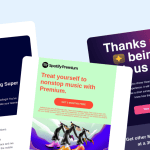
Adding this personal touch to your email marketing strategy means you can build more personal relationships with your customers and increase average order values by tempting them to add on handy extras.
Wrapping up
After spending such a long time building up your mailing list with quality leads, missing the opportunity to monetize your email content can feel as if you are throwing your profits away.
By segmenting your mailing list and creating targeted campaigns designed to increase engagement and maximize conversions, you are in a prime position to incorporate paid features. Whether you implement a newsletter subscription service, sell ad space, or upsell customers who have just placed an order, you can begin to boost the return on investment from your email marketing efforts.