
Email usage statistics: How email continues to power global business communication


In the realm of digital marketing, email is considered the most personal channel of communication and promotion, allowing businesses to reach customers and partners directly. Email marketers leverage attractive email design, craft intriguing subject lines, map out offbeat mobile email strategies, and go to great lengths to ensure their unsolicited email marketing messages dodge spam filters and avoid ending up in the spam folder.
Evidently, business professionals recognize the effectiveness of promotional emails in generating leads, retaining current clientele, increasing sales, and enhancing ROI. Do the latest email marketing statistics support such an assumption? Let’s find out together.
Top 10 email usage statistics you should know
To begin, we will look at the most general figures on email usage:
- Last year, the number of email users worldwide exceeded 4.48 billion and is expected to approach 5 billion by 2028.
- The number of emails sent every day has grown by almost 60 million in the past 4 years.
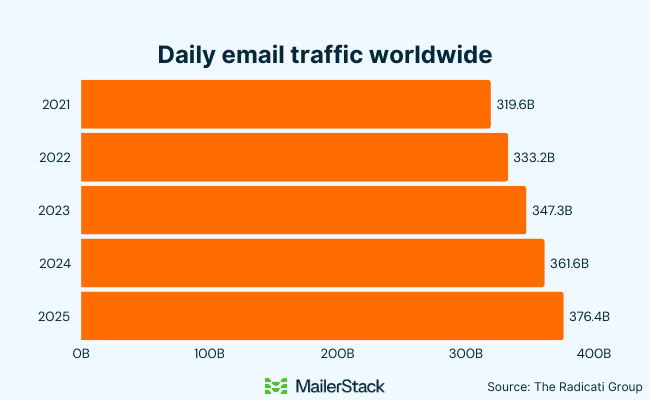
(Source: MailerStack) - Across all age groups, global email users outnumber social media users. The older a person is, the more significant this prevalence becomes, from 3% for people under 24 to 48% for the 65+ audience.
- A total of 88% of email users check their inboxes more than once per day, and 39% do so 3–5 times daily.
- The average person has 2–3 email accounts.
- The two leading hosting platforms are Apple Mail (40%) and Gmail (38%).
- The average length of email text messages is 434 words, which takes email recipients 3.3 minutes to read.
- While the average email opening rate is 21.5%, it may vary considerably by country. Denmark has the highest rate (31%), while the UK has the lowest (13%).
- A total of 45% of email messages (14.5 billion a day!) are considered spam.
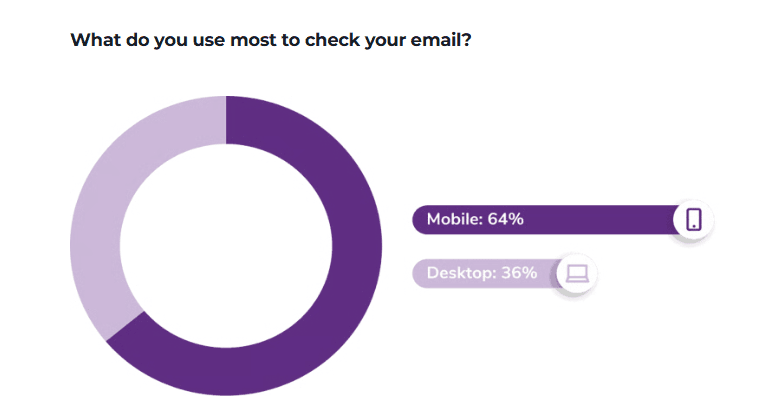
- About 60% of emails are read on mobile phones daily.

Key indicators that influence personalized email performance
Email personalization involves ten major aspects:

(Source: Porch Group Media)
What KPIs provide valuable insights into the efficiency of these email marketing techniques?
-
Open rate
Beginning your email with personalized subject lines can increase the percentage of recipients who open it by 26%.
-
Click-through rate
This index displays the number of email recipients who not only open the email but also click on the links included in it. Depending on the industry and geographical region, the average click-through rate remains between 2% and 5%. However, if you invest in email personalization, you can improve click-through rates by 41%.
-
Conversion rate
Among conversion boosters, a personalized call to action reigns supreme. It increases the likelihood that people will perform the desired action by 202%.
Why email remains the most widely used business communication channel
Despite the advent of other media, sending emails carries the day in business communication, thanks to the universality, clarity, and accountability of this channel. How do numbers bear out this conclusion?
- the first thing most employees check when coming to the office is their inbox;
(Source: OptinMonster) - email is leveraged by 91% of professionals for business purposes;
- an employee sends 40 emails a day on average and receives three times that many;
- in the B2B sector, 77% of consumers choose email as their chief contact channel.

Mobile email usage and recipient behavior
Mobile phones and other devices have taken the world by storm, so any email marketing strategy should account for their popularity. Check out some related data:
- almost two-thirds of consumers open emails on their mobile devices;
(Source: ZeroBounce) - among mobile devices, smartphones are used by 81% of people for reading emails, while tablets remain the preferred gizmo for 21% of users;
- over 62% of recipients delete or ignore emails that aren’t optimized for mobile devices;
- mobile devices account for 20% of email marketing revenue.

Email usage in marketing and customer communication
Email marketing campaigns are universally considered the go-to tool for reaching out to customers and staying in touch with them:
- a total of 59% of B2C consumers admit that emails have a crucial impact on their purchasing decisions;
- only 20% of people follow brands on social media to receive discounts and promos, whereas 60% sign up for companies’ emails with the same purpose;
- a total of 65% of customers expect to find brand discounts and offers in the promotional and marketing emails they receive;
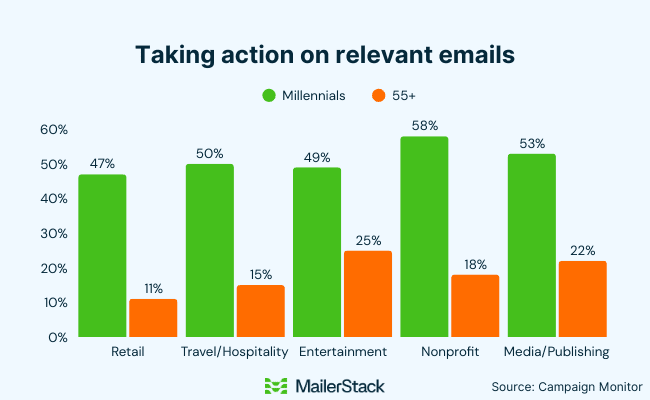
- consumer behavior among millennials indicates they are more likely to take action on relevant emails than older people.

Email frequency and recipient engagement
The principle “the more, the better” doesn’t work in marketing campaigns. As stats show, sticking to this outdated approach may backfire if you don’t practice moderation:
- a total of 28% of consumers believe that 2–3 times a week is the best sending frequency for promotional emails;
- over half of companies send their clients 2–4 emails per month;
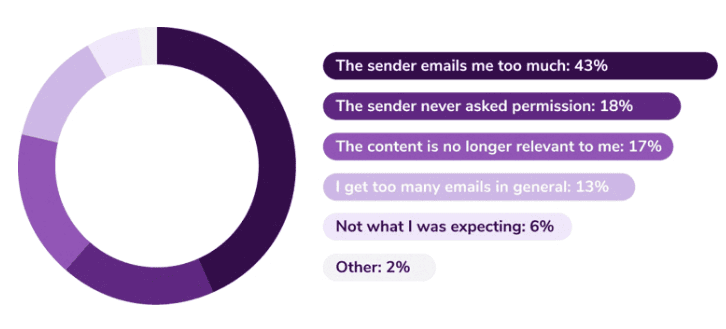
- an excessive frequency of received emails causes 43% of unsubscribes;
(Source: ZeroBounce) - consumers spend more when they receive 10–19 emails per month. Such people make the most orders (12.17 on average).

Email usage across different industries
Email usage for, say, a digital equipment corporation is not the same as for an eCommerce site. What are the relevant statistics across various verticals?
- while the average click-through rate is 2.65%, it is 4.1% for government institutions;
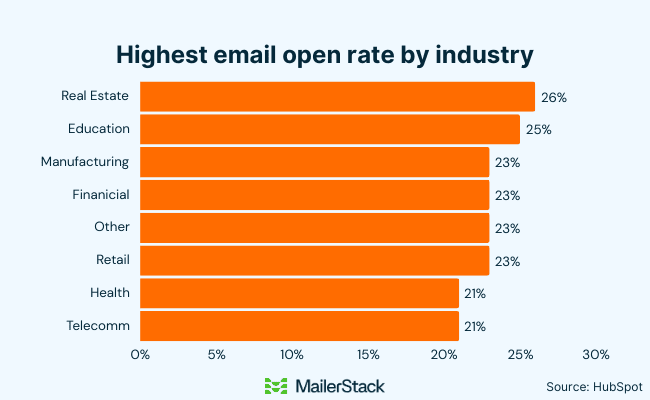
- the real estate sector enjoys the highest email open rate;
(Source: MailerStack) - automotive and aerospace industries have the lowest open rates (12.6%);
- email campaigns are considered the most effective customer retention tool by 80% of retail businesses.

How email usage impacts business productivity
While email marketing campaigns are mission-critical for customer acquisition and retention, they also affect the performance of the personnel involved with them:
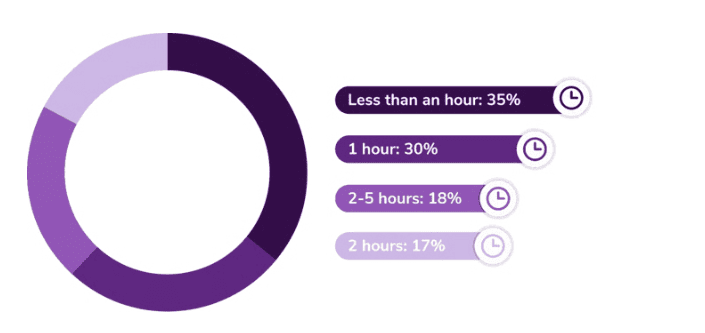
- over a third of employees spend less than an hour of their working time on email management, while the other 65% spend more;
(Source: ZeroBounce) - time wasted on unnecessary emails costs organizations $650 billion a year in losses;
- 85% of Americans experience stress when reading and answering emails.

Email security and trust in everyday communication
As digital technologies expand into an ever-widening range of domains, users increasingly express concerns about their safety and security. What about email communication?
- internal email mistakes cause 66% of all data breaches;
- 60% of workers regularly neglect security practices to complete a task on time;
- phishing scams remain one of the most serious threats to recipient security, with the number of fraudulent websites exceeding 1 billion;
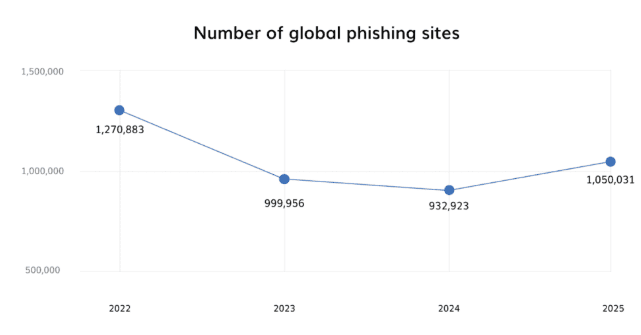
(Source: Power DMARC) - together with SaaS, webmail platforms rank second among the most frequent targets of phishing attacks (18.2%), trailing only financial institutions (18.3%).


Future trends in email
To maximize the effectiveness of email usage, any forward-looking organization can’t ignore the evolving trends that shape the contours of the realm today and will continue to do so in the foreseeable future.
-
AI-powered hyper-personalization
According to various estimates, artificial intelligence will be responsible for handling 75%–89% of email-related tasks, even this year. It will allow marketers to introduce real-time email personalization, tailoring standalone messages and entire campaigns to each consumer’s individual preferences and needs.
-
Interactive content
Static emails live on borrowed time. In-email shopping, gamification, carousel galleries, and other app-like experiences will dominate the industry for years to come. As statistics reveal, such dynamic email content can deliver a 258% higher ROI than the old-school static one.
-
Intelligent inboxes
Smart filtering technologies harnessed by email providers enable inboxes to filter and prioritize messages. To let their emails reach addressees, businesses should deliver demonstrable value with their emails and create relevant experiences. From now on, relevance spells deliverability.
-
Emails as a part of an omnichannel strategy
Email-first thinking is quickly becoming extinct, giving way to the customer-journey-first approach. It shifts from prioritizing email in marketing efforts to embedding it in a broader scheme. From this perspective, email is only one of the touchpoints (alongside SMS, push notifications, in-app messaging, and other channels) that orchestrate a cohesive, responsive customer journey.
Wrapping up
The numerical data the article contains is the best proof of the significant role email plays in contemporary business. How to gain maximum benefits from leveraging it? Join Stripo for high-end, user-friendly software solutions that will help you craft compelling messages that resonate with your target audience.


0 comments