
Nonprofit email marketing statistics: How emails drive donations, engagement, and advocacy


Digital email marketing isn’t just about sales; it’s about uniting people around meaningful goals that change our world for the better. Charitable, volunteer organizations and advocacy-focused groups need public support and contributions; therefore, they use email marketing as an accessible and cost-effective channel for promotion.
The main goal of nonprofit email marketing isn’t to make a profit, but to achieve a social, charitable, or educational goal. In this article, we discuss how nonprofit organizations use email outreach to achieve their goals, exploring key nonprofit email stats to understand the importance of personalization, automation, and other factors to ensure successful mailing campaigns, discover future trends, and gain many valuable insights!
Top 10 key nonprofit email marketing statistics
Before launching mailing campaigns for nonprofits, many doubts and questions often arise. The organizations often wonder about effectiveness, cost, and audience response. Is email marketing worth the investment in time and resources?
As you'll see from the statistics that we compiled below, email outreach remains as relevant and effective in 2026 as in the previous year.
- Nonprofit email open rate: 28.59%. This click-to-open rate (CTOR) demonstrates strong engagement compared with other types of emails.
- Average click-through rate (CTR): A high rate of 3.29%. About 3 out of 100 email recipients click on a link. This highlights the solid interest and deeper engagement with these mailing campaigns.
- Email use among nonprofit marketers: Approximately 86% of nonprofit organizations use email promotions as a powerful tool to communicate with donors.
- Frequency of nonprofit emails: On average, nongovernmental and charitable organizations send more than one email per week to each subscriber.
- Donor channel preference: Nearly half of donors (48%) prefer email as the channel for receiving updates and appeals. Direct mail, or a physical letter, ranked second.
- Contribution to online nonprofit revenue: Email accounts for approximately 11% of all online revenue for average nonprofit organizations.
- Mobile opens: ~53% of emails are opened on mobile devices. It’s a sign that modern digital campaigns via email need a mobile‑friendly design.
- Multimedia impact: Including videos in emails is a powerful content marketing tactic because multimedia can boost your CTR by 65%.
- Personalization: Personalization’s impact on campaign success is enormous because it increases open rates by +26% and conversion rates by +202%.
- Email list size: On average, nonprofit organizations maintain email lists of 4,191 contacts. Small nonprofits have around 547 contacts, and large nonprofits reach up to 6,602. This metric highlights potential audience reach.
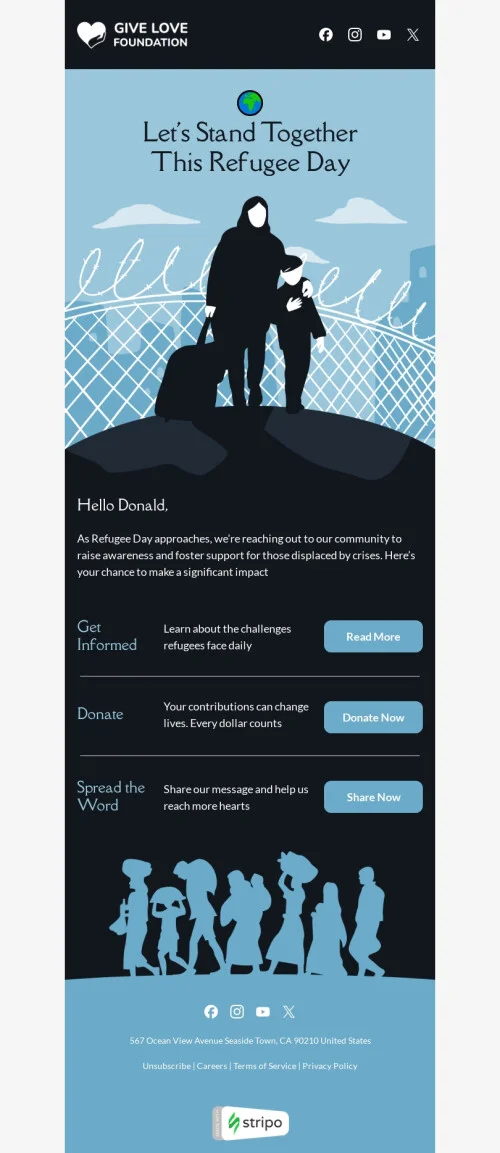
Key indicators for personalized nonprofit emails
Personalization in emails helps increase donor engagement significantly. Emails with personalized subject lines are opened more often (about 26% more), and personalized calls to action result in significantly higher conversion rates (around 202% greater).
How to use personalization to create the best nonprofit campaigns via email:
- add the subscriber's name in the subject line or at the beginning of the welcome emails;
- segment your audience by interest, age, geography, or activity;
- provide tailored recommendations and CTAs instead of using default calls (standard, pre-set buttons or actions in emails);
- include dynamic content based on subscriber or donor behavior;
- conduct A/B testing of subject lines, content, and sending times.
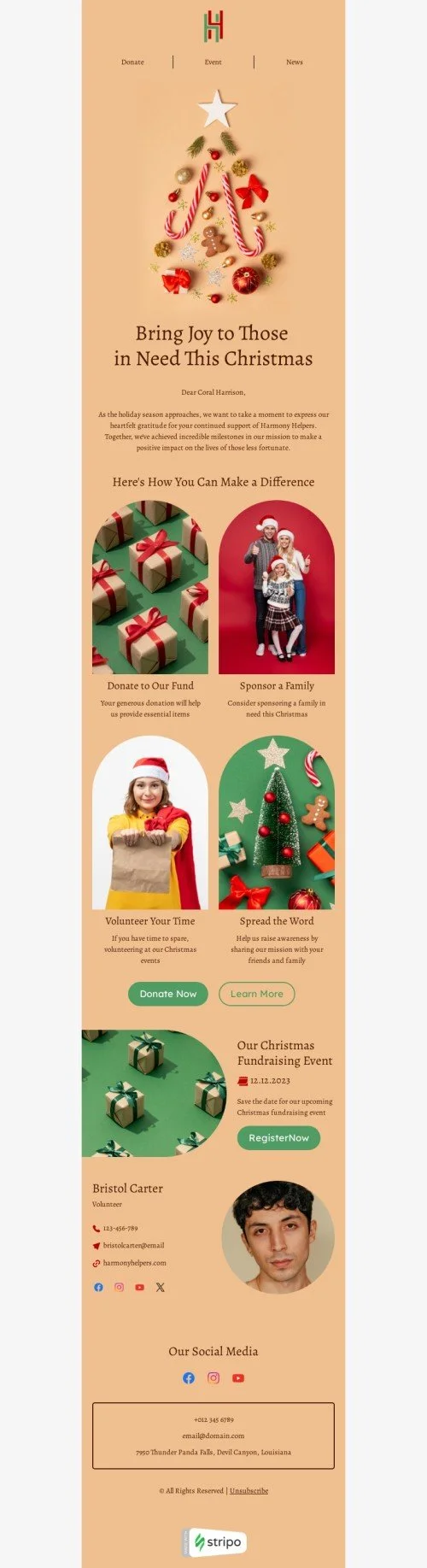
Email marketing for donor acquisition and retention
According to NP Tech for Good, even younger donors prefer email to other channels, such as social media and phone calls, for receiving updates and appeals. Also, if you have donors’ email addresses, сonsistent, but unobtrusive, messaging can increase donor retention by approximately 29%.
Boosting donations and event attendance
The more clicks, the higher the conversion rate and the faster the fundraising round closes. Email delivers a high return on investment of ~$36-$40 for every dollar spent.
Beyond fundraising, email outreach also helps promote events. Reminder emails and countdown mailing campaigns (“Hurry! Only 12 hours left to donate and make an impact!”) can increase event registrations by up to 30%.
How to build and maintain an effective email subscriber list
Worried about email deliverability and whether your emails are reaching the right audience? Let's build a high-quality subscriber list.
Here are simple steps:
- Use transparent and ethical sign-up forms (website, donation pages, events).
- Offer value for subscribing (updates, impact stories, exclusive content).
- Segment the email list for more targeted communication (increases the CTR to 100%).
- Send emails regularly but not too frequently (see the next section for timing).
- Personalize subject lines, content, and calls to action.
- Keep email content relevant and mission-focused.
- Clean the list periodically, and remove inactive subscribers.
- Use convenient platforms to manage your email contacts.
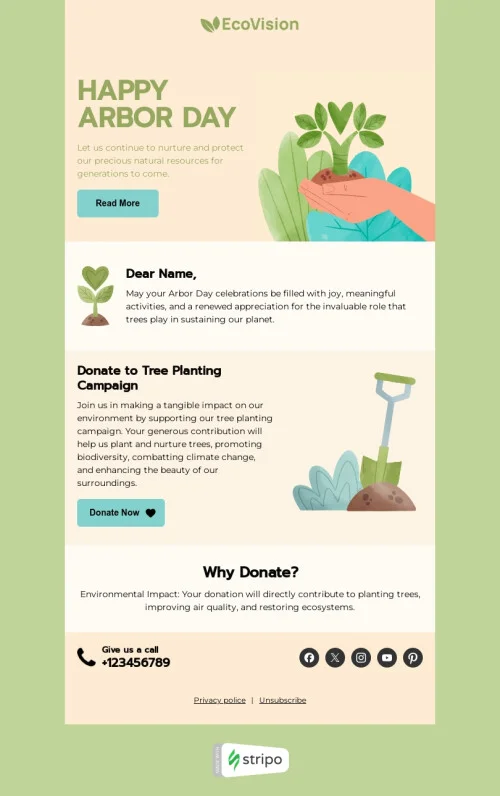
Email automation for nonprofit campaigns
Email automation will help you deliver the right message to the right person at the right time. By using automated email workflows (automating segmentation, personalized content, and regular email series), organizations can boost click-through rates, increase revenue (by 760%), retain donors, and maintain a clean subscriber list.
When to send nonprofit emails
Sending emails regularly will boost open rates and CTRs, but it’s important to choose the right days, hours, and optimal sending frequency.
Best days: Tuesday–Thursday.
Best hours: 9 a.m.–11 a.m.; also good: 10 a.m.–noon.
Frequency: 74% of nonprofit organizations send email nonprofit fundraising appeals in the following frequency:
- 67% quarterly;
- 19% monthly;
- 7% twice monthly;
- 3% weekly;
- 3% daily;
- 1% twice weekly.
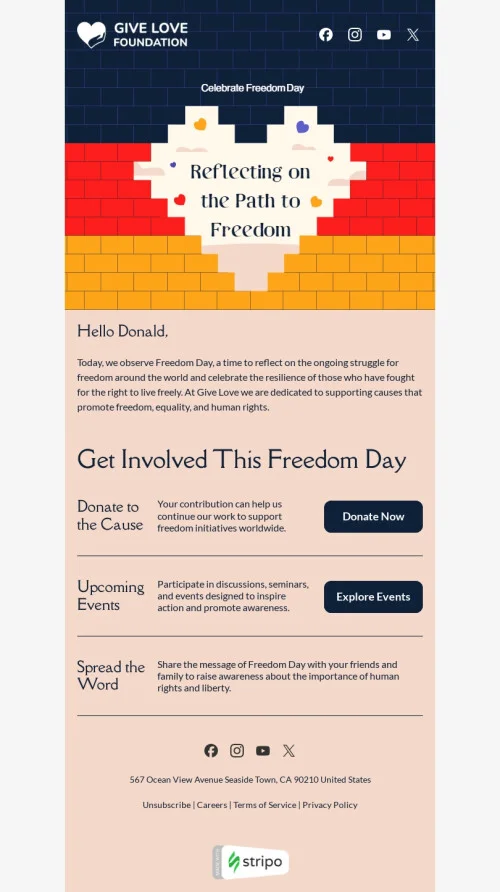
The impact of mobile optimization on nonprofit mailing campaigns
Most of your donors and supporters will open your email on a phone or tablet. It’s unfortunate, but if an email isn’t optimized for mobile, about 42-44% of recipients will delete it immediately, and the rest will ignore it.
A responsive mobile design with clear buttons, non-intrusive email subscribe popups, and readable content will help you achieve up to ~15-24% higher CTR and conversion rates compared with traditional email campaigns. Recipients will be more likely to donate or register for your events.
Nonprofit email marketing and advocacy campaigns
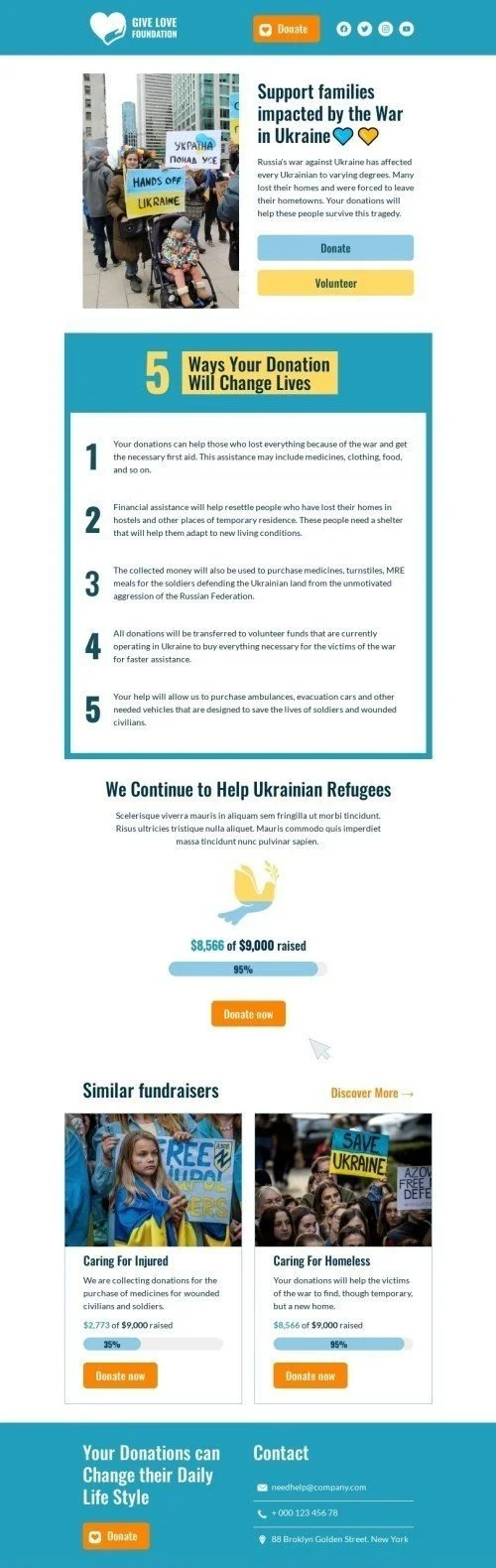
Emails promoting advocacy actions, petitions, or awareness campaigns often achieve a higher click-through rate (5-6%) than standard fundraising emails.
Charitable, volunteer, and advocacy organizations commonly use advocacy email promotions to increase nonprofit website traffic and engage supporters for social impact.
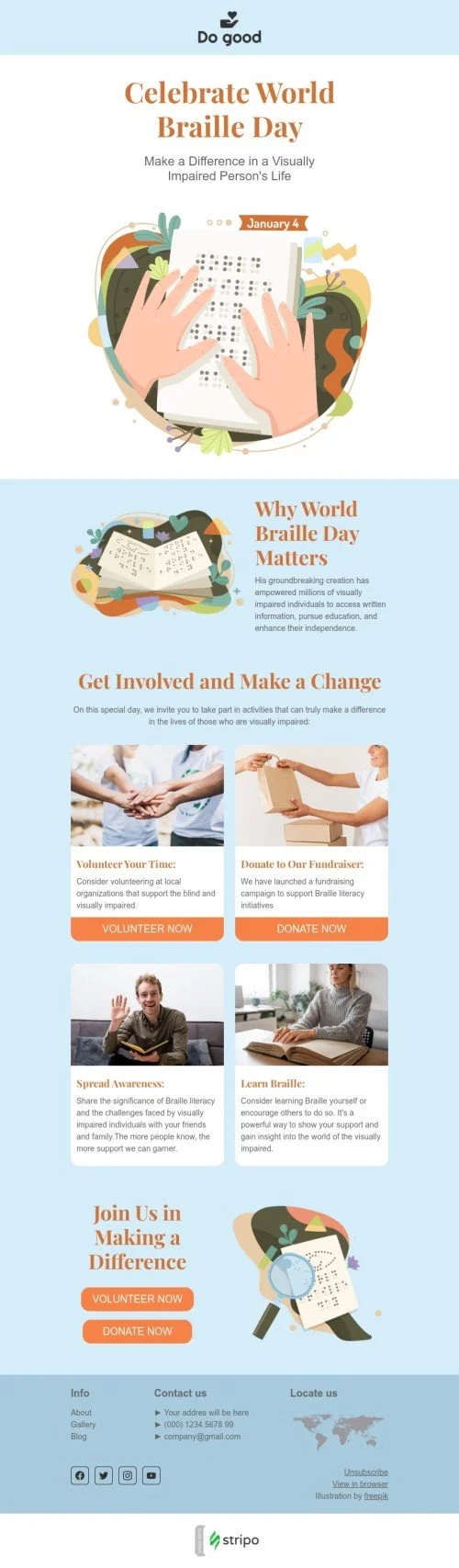
Subject lines that drive donations and engagement
Subject lines are a vital element of a successful email that can spark a donor’s interest and boost engagement metrics. We already have discussed how personalizing the subject line by adding a name to it makes a positive impact on clicks and conversions, but there's more.
The email subject line’s content and formatting are also important.
Research shows that subject lines with questions can elicit a ~50% higher open rate. Using numbers in the subject line increases open rates by ~17%. As for length, email subject lines between 61 and 70 characters are read most often.
Measuring the effectiveness of nonprofit mailing campaigns
This cheat sheet with formulas definitely will come in handy when measuring the effectiveness of your digital marketing strategy and the rate of unengaged subscribers:
- open rate: (emails opened ÷ emails delivered) × 100;
- click through rate: (clicks on links ÷ emails delivered) × 100;
- conversion rate: (recipients completing desired action ÷ clicks on links) × 100;
- list growth rate: (new subscribers ÷ total subscribers at start) × 100;
- bounce rate: (emails bounced ÷ emails sent) × 100;
- unsubscribe rate: (unsubscribes ÷ emails delivered) × 100.
Wrapping up
The trends that are changing nonprofit email outreach include use of generative AI (81% of marketers already use it), the rise of automation, a focus on personalization and segmentation, and mobile optimization for Android or Apple Mail. These practices don’t just double the donation; they can increase it even more.
The best part? You don’t have to wait. You can start using these tools to build your email strategy and engage your audience immediately.
A better future starts with you right now! Sign in and use nonprofit email templates to engage your audience and make a real impact together.


0 comments