
Email marketing for home builders: How to attract buyers and build lasting relationships


This article offers insights into how home builders can best approach their email marketing campaigns. It explains the importance of optimized email design and provides examples, content for inspiration, and best practices.
If you’re a home builder, you know that the home-buying process is a big deal that means a lot to your clients. They’re doing their “big life math,” adding and subtracting school zones, commute times, rates, timelines, family opinions, and so on. Above all, they’re terrified by the thought of choosing the wrong place.
Efficient email marketing allows home builders to instill that dream-home confidence in prospective buyers. It lets you guide their decision gradually, educate them without pressure, and lead people from “just curious” to “let’s book a tour” in a way that feels helpful, not salesy.
This guide describes how to approach email design for construction companies’ marketing, producing messages that actually get replies.
Why email marketing matters for home builders and real estate developers
Let’s start with the obvious truth that most marketers must face: Buyers take time.
The average time to find a new home is three to four months, and 22% of buyers say they searched for six months or more. That’s long enough for an Instagram ad to be forgotten, a lead form to go stale, and a competitor to slide in.
Email, meanwhile, is built for long cycles. It’s not just a promotion channel; it’s a relationship channel. You’re showing up with progress updates, answers to uncomfortable questions, and the clarity that makes people feel safe enough to take the next step.
The numbers show the effects: Email marketing earns about $36 in return for every $1 spent, depending on the company and campaign.
Another builder-specific insight is that 60% of buyers share ownership with at least one other person, such as a spouse or partner. Emails are inherently forwardable, which makes them perfect for stakeholders who missed the house tour.
What email marketing is for home builders (and how it’s used)
In the home building industry, email marketing is not about a pretty weekly newsletter and vibes. It’s a system for moving people through three realities:
- They want to picture themselves living there.
- They want to understand the process without feeling ignorant.
- They want confidence that you’ll deliver what you promise.
You should base your construction-related email marketing campaigns on addressing those realities. For this, structure your email strategies with a focus on the following:
- Nurturing leads:
- emails disclosing local education or floor plans;
- emails offering financing guidance or decision support.
- Creating demand:
- emails advertising new releases, open houses, or community launches.
- Maintaining trust:
- emails sharing construction updates, timelines, what’s included, or warranty info.
- Strengthening relationships post-sale:
- emails with closing preparations, homeowner resources, and referrals.
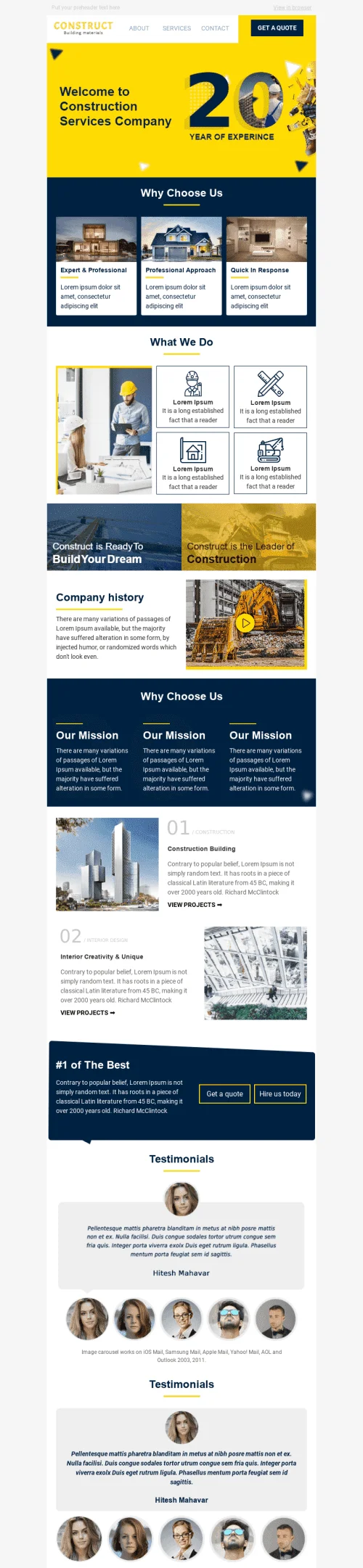
How home builders can build a good email list of prospective buyers
A builder’s list of email contacts prioritizes relevance over size. The aim is a serious intention to convert a new buyer, not just engage in general promotion. Here are some pro tips for building a reliable contact list.
Start with intent-based signups
Instead of “Sign up for updates,” offer signups tied to what buyers actually want:
- early-bird pricing and availability alerts for a specific community;
- floor-plan pack download (two to three layouts, options, included features);
- open house or model tour RSVP;
- construction update series (“See monthly progress photos”);
- “What’s included vs. upgrades” guide;
- move-in timeline notifications (“Homes available in 60–90 days”).
Collect emails everywhere buyers show up
Builders are often challenged in email networking because they find contacts only online. Try to leverage other venues and see if you can use these options:
- QR codes at open houses (connect to a community-specific signup);
- tablet signups at model home check-in;
- “Text-to-join” for events;
- lead capture on community pages (not only the homepage);
- referral capture (simple: “Forward this to someone who’s house hunting” plus a “Get updates too” link).
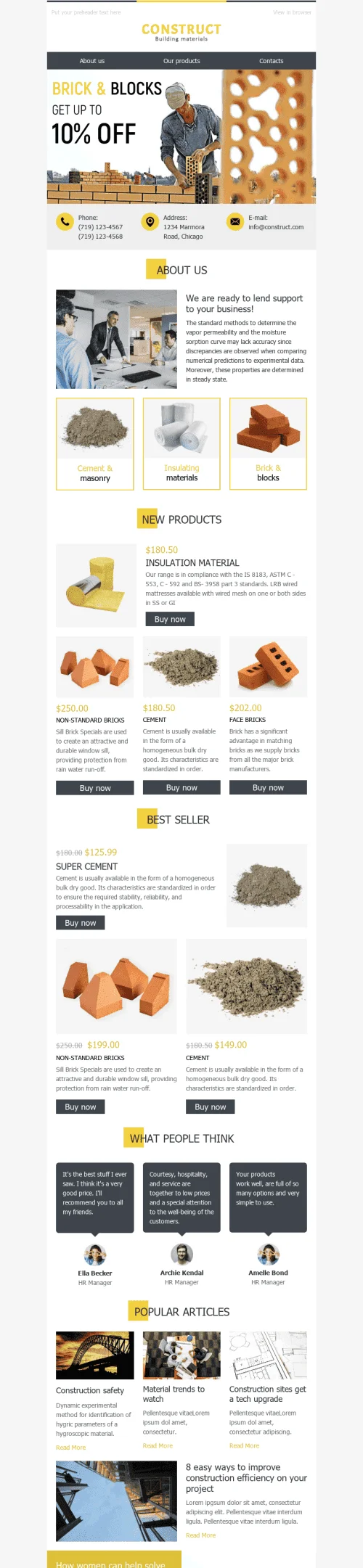
It’s also crucial to obtain permission for every signup to protect your list and improve performance:
- clear consent: Add a short disclosure at every entry point (QR, tablet, text, forms);
- double opt-in: Confirm via email to ensure valid, engaged contacts;
- easy unsubscribe: One-click opt-out in every email.
Set expectations early
The fastest way to get unsubscribes is to surprise people, so tell them
- what they’ll receive;
- how often;
- how to change preferences (community, budget, timeline).
This may sound trivial, but it signals professionalism, and that’s what buyers want from you.

Email marketing funnel for home builders: From inquiry to home purchase
Bear in mind that your ultimate goal is not to send more emails; it’s to send the right emails at the right decision points. Always give your recipients room to breathe, and use this time to personalize.
Here’s a timeline that you can use:
Stage 1: Inquiry (first 24 hours)
This is where deals quietly die. Speed matters. Your first email should
- confirm the request;
- deliver something useful immediately (pricing range, plan pack, tour link);
- set the next step in motion (“pick a tour time”).
The email should also sound human. Not “Dear valued lead.” More like, “Thanks for reaching out. Here are three quick ways to explore [Community Name] without guessing.”
Stage 2: Consideration (week 1–4)
This is where buyers compare you against everyone else and their own anxiety. Valuable content like this wins here:
- floor plan spotlights (one plan per email);
- community lifestyle info (parks, commute, schools, shopping);
- “what’s included” clarity;
- a short “how building works” explainer;
- financing pathways (without becoming a lender brochure).
Stage 3: Intent (month 1–3+)
Now you earn action. People are warm, but still hesitant. You send
- limited releases (only if real);
- event invitations;
- hard hat tours;
- deposit/closing process explainers;
- timeline transparency (e.g., which delays happen and why).
Stage 4: Contract to close (and beyond)
Many builders stop nurturing here. That’s a mistake. In this phase, you reduce support load and increase referrals:
- construction milestones;
- what to expect at each inspection;
- warranty and homeowner portal onboarding;
- referral invitation (after a good experience moment).
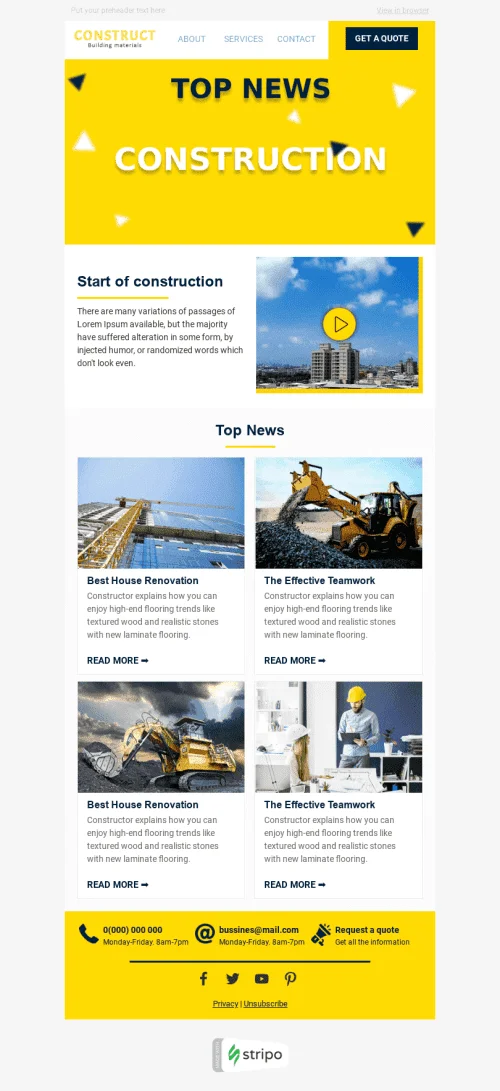
Best types of emails for home builders
If your emails are just “Here are homes,” you’re forcing buyers to do mental work. One well-tried marketing strategy is to design each email to answer one question buyers already have.
Here are some high-performing email types for builders and the content to include in them:
- community launch emails: What makes it different, who it fits, and what’s next;
- release alerts: Phase opening, lot drops, and move-in-ready inventory;
- floor plan stories: “Why this layout works for remote work and storage”;
- decision-support emails: Included vs. upgrades, build timeline, and warranty;
- event email campaigns: Open house, guided or virtual tours, webinars, Q&A sessions;
- progress updates: Photos, milestones, and what’s happening this month.
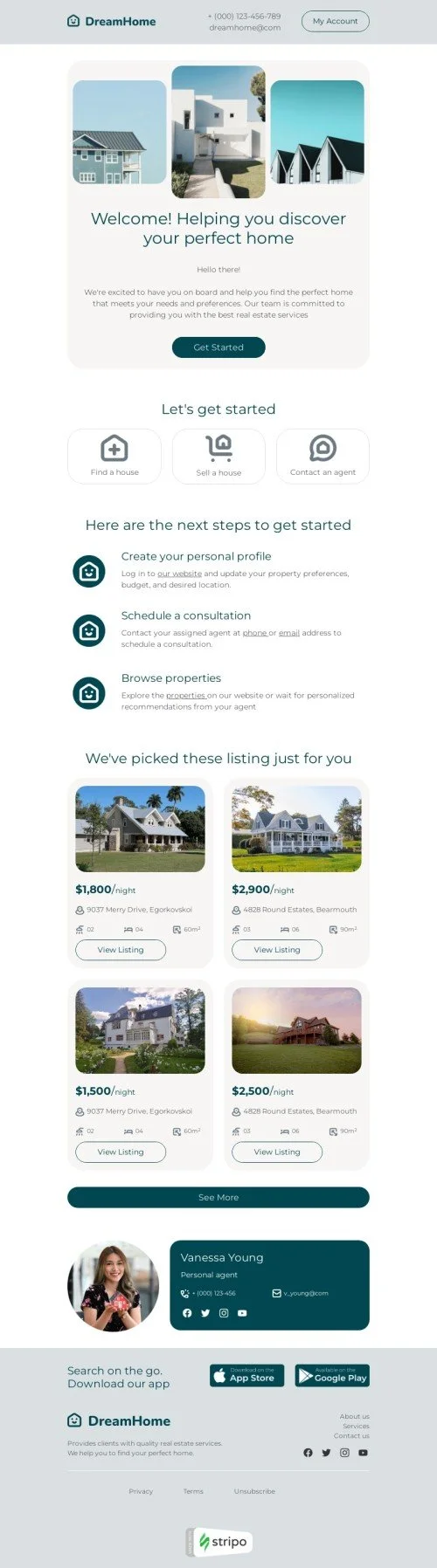
Personalization strategies in email marketing for home builders
Good personalization isn’t just “Hi, John.” It happens when a recipient sees that the message is relevant to their individual situation. To tailor such messages, you should segment an email newsletter and personalize it over time.
Start with three segments that instantly make the builder email smarter:
- timeline: 0–3 months, 3–6 months, over 6 months;
- home type: Townhouse vs. single-family vs. custom build;
- budget band: Broad ranges for the demographics you serve.
Then, based on the recipients’ reactions, personalize the next step:
- if they click floor plans, send a plan pack and tour invite;
- if they click financing content, send affordability examples and lender Q&A invites;
- if they click amenities, send community lifestyle highlights and a model tour.
Email marketing campaign ideas for home builders
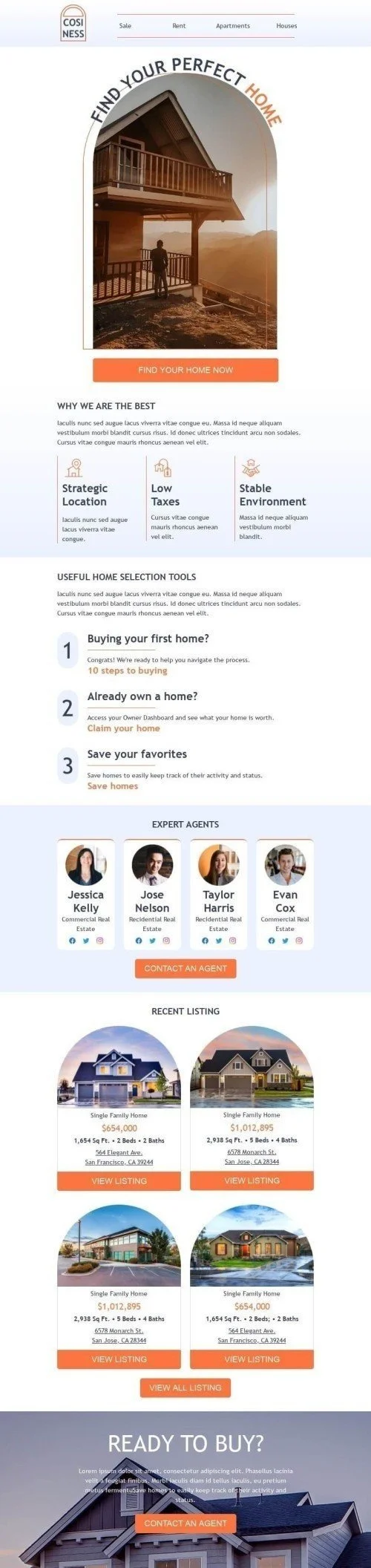
An email marketing campaign offers a diverse terrain for exploration, where construction companies can find the sentiment that works best for them.
Try these many types of housing-focused emails:
Community launch campaign (story-driven)
- email 1: “A new community built for [type of buyer]”;
- email 2: “What’s included (and what’s not)”;
- email 3: “Floor plan spotlight and why it works”;
- email 4: “Tour invitation and what to look for”;
- email 5: “Release timing and how to get early alerts.”
Open house campaign (conversion-focused)
- invitation email with a simple booking CTA;
- reminder email: “What to ask and what to bring”;
- follow-up email: “Your next best step” (a tour, call, or plan pack).
Construction transparency series (trust-focused)
Monthly email with:
- progress photos;
- timeline update;
- a short “builder explainer” (foundation, framing, and inspection stages);
- one CTA (book a tour or ask a question).
Best practices and examples
How do you compose a concise first email? What are the best building email openers and closers? And how do you measure their success? The best practices below provide answers to these questions.
First email
The best builder emails catch the eye and feature high-quality visuals. But first and foremost, a welcome email must be accessible, light, and to the point.
Use these tips to keep it concise, striking, and conversion-oriented:
- one primary CTA per email (book a tour, see availability, download plans);
- “skimmable” layout: short sections, clear headings, plenty of spacing;
- one hero image and at most two supporting images;
- buttons that read like actions (e.g., “Book a model tour” instead of “Learn more”);
- “quick facts” block: price range, beds/baths, location, move-in timing, etc.
Subject lines
The subject line inspires first impressions and serves as your greeting card. You need to hook the recipient, ideally making them click on an email.
The many examples below can diversify your subject lines:
Launch and community
- “Want first access to [Community Name] releases?”
- “A new neighborhood for people who hate guesswork”
- “What’s actually included in our standard finish package”
Tours and events
- “Tour times for Saturday (pick what works for you)”
- “Before your visit: Seven questions worth asking”
- “Hard-hat tour: See the build in progress”
Decision support
- “The build timeline, explained without the chaos”
- “Included vs. upgrades: The honest breakdown”
- “This floor plan solves the ‘Where do we put everything?’ problem”
Re-engagement
- “Still house hunting or taking a pause?”
- “Want fewer emails but only the important ones?”
- “Should we keep sending [Community Name] updates?”
Email signatures
In turn, signatures are the last words of an email that complete the impression. A construction business shouldn’t miss the opportunity to leverage them, too.
A good template for a home builder’s email signature with just the necessary elements and some specialized parts thrown in looks like this:
First name/Last name
New Home Specialist, [Builder Name]
[Phone] | [Email]
[Community/City]
Book a tour: [Link]
Floor plans and availability: [Link]

Success metrics
You should track these to analyze custom home builder emails:
- clicks;
- replies;
- tour bookings;
- brochure downloads;
- call requests.
Use click-to-open rate (CTOR) and click rate as the main metrics: They indicate how efficiently your digital marketing efforts attract potential buyers. They can also reflect potential conversions.
Wrapping up
Construction email marketing can be the main pillar of a home builder’s business, but only when done right. It isn’t about sending more. In this niche, you simply can’t expect to attract new clients with a persistent newsletter. It’s about being more useful at the exact moment when a buyer hesitates.
If you want the fastest improvement with the least effort, use Stripo to build a strong lead-generation sequence and reap maximum results. The information above offers you a wealth of good examples for your initial inspiration.
FAQ
How often should home builders send marketing emails?
One to two emails per week is a safe baseline. If you’re running a launch or event, you can send more in short bursts, but it’s important to keep emails segmented and helpful, not noisy.
What types of emails actually drive tours and appointments?
To convince a recipient to book a new home tour, an email must lower their uncertainty and make the next step easy: Use tour invitations with time slots, new release/availability alerts, and floor plan spotlights.
What should we track if open rates aren’t reliable?
Focus on clicks, tour bookings, replies, and brochure/floor plan downloads. Those actions reflect real buyer intent, showing who needs a personal follow-up.
Should we include pricing in emails, or will it scare leads away?
You should include price ranges when possible, especially for high-intent subscribers, because it filters out those who aren’t prospective buyers. Just make sure to keep it informative: Pair pricing with what’s included or move-in timing.
How do we keep leads engaged during long build timelines?
Send a simple monthly construction update with progress photos, milestone notes, and one helpful explainer (timeline, inspections, selections, warranty). Reduce their anxiety by describing timelines and warranties.


0 comments